latesttechsnews.com

AI trends

Explore AI tools, machine learning, automation, and real-world business applications shaping industries and driving next-generation digital transformation.

Nano Banana 2 vs Nano Banana Pro
AI trends

Nano Banana 2 vs Nano Banana Pro: Speed, 4K & Features Compared

Nano Banana 2 vs Nano Banana Pro: Speed, 4K & Features Compared Introduction Nano Banana 2 is faster and optimized for real-time AI image generation, while Nano Banana Pro focuses on refined 4K quality and professional-grade output. The right choice depends on whether you prioritize speed and workflow efficiency or maximum image detail. As AI image generation continues to evolve, understanding how Gemini AI models work helps explain the difference. Built on Google’s Gemini architecture, Nano Banana 2 emphasizes rapid processing and scalability, while Nano Banana Pro delivers deeper refinement and cinematic precision. AI image generation is quickly becoming one of the most important Emerging technologies shaping 2026, transforming industries from marketing to digital design. In this comparison, we break down speed, 4K performance, features, usability, and overall value to help you choose the right model for your creative needs. Quick Comparison Overview: Nano Banana 2 vs Pro Feature Nano Banana 2 Nano Banana Pro Core Architecture Gemini 3.1 Flash Image Gemini Pro Model Speed Ultra-fast generation Moderate rendering speed 4K Image Support Yes Yes Character Consistency Supports up to 5 characters Strong consistency, less scalable Object Handling Handles up to 14 objects Detail-focused object rendering Real-World Grounding Integrated search-based context Limited contextual grounding Ideal For Fast content creation & rapid workflows Professional-grade visuals & refined output Choose Nano Banana 2 if speed, scalability, and workflow efficiency are your top priorities. Choose Nano Banana Pro if you need cinematic-level detail, refined rendering, and production-ready 4K visuals. What Is Nano Banana 2? Nano Banana 2 is Google’s advanced AI image generation model built on the Gemini 3.1 Flash architecture, designed to create high-quality 4K visuals with ultra-fast processing and strong scene consistency. It is powered by Google’s Gemini AI architecture, which is designed for multimodal reasoning and advanced image processing. It combines speed, contextual intelligence, and structured visual accuracy, allowing users to generate complex images with multiple characters and objects while maintaining alignment and realism. Unlike traditional AI models that prioritize either speed or quality, Nano Banana 2 is engineered to balance both. It supports rapid iteration, scalable content production, and reliable multi-element rendering, making it suitable for marketing, social media, storytelling, and professional creative workflows. In simple terms, Nano Banana 2 is a fast, intelligent, and scalable AI image model built for modern content creators who need consistent results without long rendering times. What Is Nano Banana Pro? Nano Banana Pro is Google’s premium AI image generation model designed for high-end creative workflows, delivering refined 4K visuals with enhanced texture detail, cinematic lighting, and professional-grade image precision. It focuses on visual depth and artistic refinement rather than speed, making it ideal for print-quality graphics, editorial design, advertising creatives, and studio-level production environments. In simple terms, Nano Banana Pro is built for professionals who prioritize maximum image detail and polished output over rapid generation. Speed Comparison: Which One Is Faster? Nano Banana 2 is significantly faster than Nano Banana Pro because it runs on Gemini 3.1 Flash architecture, which is optimized for rapid image generation. Nano Banana Pro focuses more on refinement and detail, resulting in slightly longer rendering times. Speed plays a critical role in modern AI workflows, especially in how AI image generation works for real-time creative production. Nano Banana 2 Speed Performance Nano Banana 2 is built for ultra-fast output. Thanks to Flash-based processing, it can: For users who need immediate results without sacrificing quality, Nano Banana 2 provides a clear advantage. Nano Banana Pro Speed Performance Nano Banana Pro emphasizes output refinement over raw speed. Its rendering process: While it may not be as fast as Nano Banana 2, the additional processing time often results in more detailed and cinematic visuals. Nano Banana Pro is better suited for projects where image perfection is more important than generation speed. Nano Banana 2 vs Pro: 4K Quality & Visual Performance Both Nano Banana 2 and Nano Banana Pro support 4K image generation, but they are optimized for different priorities. Nano Banana 2 focuses on delivering high-resolution visuals quickly and efficiently, while Nano Banana Pro emphasizes depth, refinement, and cinematic quality. If you’re choosing between the two, the core difference comes down to speed versus artistic precision. Nano Banana 2 4K Performance Nano Banana 2 delivers sharp, high-resolution 4K output designed for fast digital publishing. It balances image clarity with rapid processing, making it ideal for creators who need quality visuals without long rendering times. Key strengths: Powered by Flash-based architecture, Nano Banana 2 maintains strong image quality while significantly reducing generation time. Nano Banana Pro 4K Performance Nano Banana Pro is built for refined and production-ready output. Although it generates images more slowly, it enhances visual depth and detail for professional use. Key strengths: For large-scale prints, editorial layouts, advertising campaigns, or artistic compositions, Nano Banana Pro may offer slightly more polished results. Features Comparison: Multi-Character & Object Handling One of the most important differences between Nano Banana 2 and Nano Banana Pro is how they manage multiple characters and objects within a single scene. Nano Banana 2 Nano Banana 2 is built for structured scalability and complex compositions. It can: This makes it highly effective for storytelling visuals, branded mascots, multi-scene campaigns, and detailed marketing creatives. Nano Banana Pro Nano Banana Pro focuses more on refinement than scalability. It offers: However, it is less optimized for handling larger, multi-character compositions at scale. Nano Banana 2 vs Pro: Style & Creative Flexibility Another important difference between Nano Banana 2 and Nano Banana Pro is their approach to style versatility and creative output. Nano Banana 2 Style Capabilities Nano Banana 2 is designed for broad creative flexibility. It can generate a wide range of visual styles, making it suitable for diverse digital workflows. It supports: Because of this versatility, Nano Banana 2 works well for content creators, marketers, educators, and agencies that need multiple visual formats within the same platform. Nano Banana Pro Style Capabilities Nano Banana Pro focuses more on refined and premium artistic output. Its strengths include:
Moltbot
AI trends

Moltbot Explained: A Complete Guide to the AI Assistant Gaining Attention in 2026

Moltbot Explained: A Complete Guide to the AI Assistant Gaining Attention in 2026 Introduction Artificial Intelligence is no longer limited to answering questions or generating text. In 2026, AI tools are evolving into practical assistants that help users automate tasks, manage workflows, and improve productivity. One such tool that has recently gained attention is Moltbot. Moltbot is often discussed as a next-generation AI assistant because it focuses on task execution and automation, rather than conversation alone. Among the popular AI tools for automation, Moltbot stands out for its ability to handle complex workflows and perform actions beyond simple text responses. In this guide, we take a detailed look at what Moltbot is, how it works, its key features, real-world use cases, and why it is becoming part of the broader AI automation trend. What Is Moltbot? interact with applications more efficiently. Unlike traditional AI chat tools that mainly provide text-based answers, Moltbot is built to take action and perform automated tasks. This AI assistant is especially popular among developers, tech professionals, and productivity-focused users who want greater control over how artificial intelligence integrates with their systems. Moltbot can connect with different tools, execute commands, and support workflow automation making it more powerful than standard conversational chatbots. In Simple Terms Moltbot is an AI assistant that focuses on completing tasks, not just answering questions. By combining automation, flexibility, and open-source customization, Moltbot represents the next step in AI-driven productivity tools and highlights how modern AI agents are evolving beyond basic chat functionality. Why Moltbot Is Gaining Popularity in 2026 The rising popularity of Moltbot reflects a broader shift in how individuals and businesses use artificial intelligence. In 2026, users are no longer satisfied with AI tools that only provide answers—they want solutions that reduce manual work and support real-world operations. Moltbot is part of the wave of emerging technologies in 2026 that are transforming productivity and workflow automation. Several key factors are driving the growing interest in Moltbot: 1. Rising Demand for AI-Powered Automation Automation has become a priority across industries. Users are actively searching for AI assistants that can handle repetitive tasks, streamline workflows, and operate with minimal human intervention. Moltbot meets this demand by focusing on action-based automation rather than simple conversation. 2. Strong Focus on Productivity and Efficiency As workloads increase, productivity tools that save time and improve efficiency are gaining traction. Moltbot helps users manage tasks more effectively, making it attractive to developers, teams, and productivity-focused professionals. 3. Growing Interest in Open-Source AI Tools Open-source software continues to gain popularity due to its transparency, flexibility, and community-driven development. Moltbot’s open-source nature allows users to customize, extend, and control how the AI operates—an important factor for advanced users. 4. Preference for User-Controlled and Flexible AI Systems Many users prefer AI tools that offer control over data, workflows, and integrations. Moltbot provides a flexible framework that can be adapted to specific needs, making it a strong alternative to closed, limited AI platforms. As automation becomes increasingly important in modern workflows, AI assistants like Moltbot naturally stand out, positioning themselves as part of the next generation of intelligent productivity tools. How Moltbot Works Moltbot combines advanced AI models with automation logic to perform tasks efficiently. Depending on how it is set up, Moltbot can: Because Moltbot is open-source, users can customize and configure it to fit their specific needs. This flexibility makes it far more adaptable than many closed, cloud-based AI tools, allowing developers and productivity-focused users to design tailored automation workflows that suit their unique processes. In short, Moltbot is not just an AI assistant—it’s a task-oriented automation platform that bridges the gap between AI intelligence and real-world productivity. Key Features of Moltbot Moltbot offers a range of features that make it a versatile and powerful AI automation assistant. Here are its main capabilities: 1. Task Automation Moltbot can automate repetitive tasks such as scheduling actions, managing reminders, organizing workflows, and triggering system-level processes. By reducing manual effort, it saves time and helps users stay more productive. 2. Local Execution Options In many setups, Moltbot can run locally on a user’s device, giving users greater control over data handling and processing. This ensures privacy and allows for customized task execution without relying entirely on cloud-based solutions. 3. Workflow Integration Moltbot can connect with various productivity and communication tools, enabling seamless management of tasks across different platforms. This makes it suitable for individuals, teams, and small businesses looking to streamline their operations. 4. Customizable and Open-Source Being open-source, Moltbot allows developers to: This flexibility is a major advantage for technical users, allowing them to design tailored AI-driven workflows that align with their productivity goals. Common Use Cases of Moltbot Moltbot is a versatile AI assistant, and its use extends across personal productivity, business operations, and technical workflows. Here’s how different users benefit from it: 1. Personal Productivity Individuals can leverage Moltbot to stay organized and save time. Common tasks include: Moltbot helps users focus on important work while automating repetitive activities. 2. Business and Team Support Small teams and businesses can use Moltbot to streamline operations and reduce manual workload: By handling routine processes, Moltbot frees up teams to focus on strategic tasks. 3. Developers and Technical Users For developers and tech enthusiasts, Moltbot provides advanced capabilities for automation and experimentation: Its open-source flexibility allows developers to create tailored workflows and integrate Moltbot into various systems. Moltbot vs Traditional AI Chat Assistants While many AI tools focus on conversation, Moltbot stands out as a task-oriented automation assistant. Here’s a quick comparison between Moltbot and traditional AI chat tools: Feature Moltbot Traditional AI Chat Tools Focus Task automation Conversation Workflow Support Yes Limited Custom Development Yes Restricted Local Setup Option Available Mostly cloud-based Key Difference:Traditional AI chat assistants are primarily designed to provide information and engage in conversation. In contrast, Moltbot focuses on executing tasks, automating workflows, and supporting real-world productivity. This makes Moltbot ideal for developers, teams, and productivity-focused users who need more than just answers they need actionable

AI Agent vs Chatbot
AI trends

AI Agent vs Chatbot: Key Differences Explained

AI Agent vs Chatbot: Key Differences Explained Introduction Artificial intelligence is reshaping how businesses interact with customers, automate operations, and make smarter decisions through a growing range of AI-powered tools. Two of the most discussed AI-driven technologies today are AI agents and chatbots. Although these terms are often used interchangeably, they differ significantly in capability, intelligence, and real-world impact. Understanding the difference between an AI Agent vs Chatbot is no longer just a technical choice—it’s a strategic one. Selecting the wrong solution can limit scalability, reduce automation potential, and affect long-term ROI. In fact, by 2029, agentic AI is expected to autonomously resolve 80% of common customer service issues without human intervention, leading to a 30% reduction in operational costs, according to Gartner, Inc.  This guide breaks down the key differences, use cases, and decision factors to help you choose the right AI approach. What Is a Chatbot? A chatbot is a conversational software application that interacts with users through text or voice. Most chatbots rely on predefined scripts, decision trees, or limited natural language processing (NLP) to respond to user queries, a model that continues to see strong adoption, with chatbot market revenue expected to reach $28.95 billion by 2029. Chatbots are designed to answer questions, guide users through structured flows, and automate repetitive interactions. While modern AI-powered chatbots may use NLP and basic machine learning, their intelligence is typically restricted to a specific domain or use case. Types of Chatbots Chatbots vary in complexity depending on how they are built: Common Chatbot Use Cases Chatbots are best suited for structured and repetitive tasks, including: Limitations of Chatbots Despite their usefulness, chatbots have clear limitations: Chatbots are efficient but only within clearly defined boundaries. What Is an AI Agent? An AI agent is an advanced, autonomous system designed to understand context, make decisions, and take actions to achieve specific goals. Unlike chatbots, AI agents do not rely on rigid scripts. They use large language models (LLMs), machine learning, and reasoning systems to operate dynamically, powering use cases such as the best AI sales agents that qualify leads, analyze intent, and optimize sales workflows. AI agents can work independently across tools, systems, and datasets, making them ideal for complex, evolving, and data-driven tasks where continuous learning and intelligent decision-making are essential. Types of AI Agents AI agents can be categorized based on how they operate: How AI Agents Work AI agents function through: Rather than simply responding, AI agents actively decide what to do next. Common AI Agent Use Cases To better understand how AI agents are applied in revenue-focused workflows, an AI sales agent guide can help explain how these systems qualify leads, analyze buyer intent, and automate sales processes effectively.  such as: AI Agent vs Chatbot: Core Differences Explained Autonomy & Decision-Making Learning & Adaptability Task Complexity Context Awareness & Memory Integration & Scalability Proactive vs Reactive Behavior Similarities Between AI Agents and Chatbots Despite their differences, AI agents and chatbots share several common characteristics: These similarities often create confusion, but their capabilities extend far beyond conversation when it comes to intelligence and action. AI Agent vs Chatbot: Use Case Comparison Business Need Chatbot AI Agent FAQs & Customer Support Ideal for quick, repetitive queries Often unnecessary for basic support Lead Qualification Limited to scripted flows Strong at intent detection and qualification Workflow Automation Handles simple tasks only Manages complex, multi-step workflows Data-Driven Decisions Not supported Actively analyzes data and recommends actions Personalization Basic, rule-based responses Deep, context-aware personalization Enterprise Scale Limited scalability Designed to scale across systems and teams How to Choose Between an AI Agent and a Chatbot If your needs involve simple, repetitive conversations, a chatbot is usually sufficient. For complex workflows, personalization, and decision-making, an AI agent is the better choice. Complexity of Your Use Case Chatbots work best for FAQs and basic support, while AI agents excel at goal-driven workflows requiring intelligence. Budget & Implementation Effort Chatbots are quicker and more cost-effective to deploy. AI agents require higher investment but deliver stronger long-term value. Scalability & Growth Chatbots may struggle as workflows expand. AI agents are built to scale with increasing complexity. Data Privacy & Security Chatbots are easier to secure due to limited access. AI agents need stronger governance and controls. Personalization Requirements If personalization and contextual intelligence matter, AI agents are the better option. Will AI Agents Replace Chatbots? Not completely—but the balance is clearly shifting. Chatbots will continue to handle simple, repetitive tasks efficiently, especially in customer support and FAQs. However, AI agents are increasingly preferred for complex decision-making, automation, and revenue-driven workflows. Many organizations now adopt a hybrid approach, using chatbots for routine interactions and AI agents for high-impact processes. Emerging Trends in AI Agents and Chatbots As AI adoption continues to grow, businesses are moving beyond basic automation toward smarter, more adaptive systems that deliver real value. Hybrid AI Systems Combining Chatbots and Agents Chatbots handle simple questions and routine tasks, while AI agents take care of complex workflows. This hybrid approach improves efficiency without compromising intelligence. Proactive AI Agents That Anticipate User Intent AI agents analyze user behavior and context to understand needs before a question is asked. This creates smoother interactions and faster outcomes. Hyper-Personalized, Context-Aware Interactions By learning from past interactions and real-time data, AI systems deliver responses that feel personal and human. This helps build trust and improve engagement. AI Embedded Across Enterprise Workflows AI agents are increasingly integrated into CRMs, analytics platforms, and operational tools. This enables end-to-end automation and smarter decision-making across the business. Key Takeaways Chatbots are ideal for structured, repetitive conversations such as FAQs and basic support. AI agents are designed for autonomous decision-making and complex, multi-step workflows that require adaptability. The right choice depends on business complexity, scale, and long-term goals. Many organizations achieve the best results by using both strategically—chatbots for routine interactions and AI agents for high-impact processes.

Best AI Sales Agents
AI trends

10 Best AI Sales Agents in 2026

10 Best AI Sales Agents in 2026 Introduction AI-powered sales technology has evolved rapidly, and in 2026, AI sales agents are no longer optional tools; they are essential components of modern revenue teams. From lead qualification and follow-ups to personalized buyer conversations, AI sales agents help businesses close deals faster and operate more efficiently. This rapid adoption is backed by strong market growth. The global AI agents market was valued at USD 7.63 billion in 2025 and is projected to reach USD 182.97 billion by 2033, growing at a CAGR of 49.6% from 2026 to 2033. This growth highlights how quickly businesses across industries are investing in AI-driven automation to scale sales and customer engagement. This guide explores the 10 best AI sales agents in 2026, highlighting their features, use cases, and strengths to help businesses make informed decisions. What Is an AI Sales Agent? An AI sales agent is an intelligent software system designed to automate and enhance sales activities using artificial intelligence. Unlike basic chatbots, AI sales agents can understand buyer intent, qualify leads, engage prospects across channels, and support sales teams throughout the customer journey. AI sales agents typically handle tasks such as: By combining machine learning, natural language processing, and real-time data analysis, AI sales agents improve both speed and accuracy in sales operations. How We Selected the Best AI Sales Agents To identify the best AI sales agents for 2026, we evaluated platforms using the following criteria: Our evaluation focused on identifying AI sales agents that stand out not only as sales automation platforms, but also as some of the top AI tools driving measurable business impact in 2026. 10 Best AI Sales Agents in 2026 1. Drift Drift is a leading AI sales agent designed for conversational marketing and real-time lead engagement. It helps businesses capture, qualify, and route inbound leads instantly through AI-powered chat experiences. Best for: B2B companies with high inbound website traffic Key features: Conversational AI, account-based routing, CRM integrations Pros: Highly personalized conversations, enterprise-ready scalability Cons: Premium pricing for advanced automation features Drift’s continued innovation reflects key AI trends focused on conversational intelligence and real-time buyer engagement. 2. Conversica Conversica is an AI sales agent focused on automating sales follow-ups through AI-driven email and messaging. It ensures no lead is ignored by engaging prospects until they show clear buying intent. Best for: Lead nurturing and re-engagement Key features: Automated outreach, intent detection, CRM synchronization Pros: Excellent for long and complex sales cycles Cons: Limited real-time chat functionality compared to conversational tools Conversica works well for organizations managing large lead databases that need consistent, persistent follow-up without manual effort. 3. HubSpot AI Sales Agent The HubSpot AI Sales Agent is deeply integrated into the HubSpot CRM, offering AI-powered insights, automation, and lead management within a single platform. Best for: Teams already using HubSpot CRM Key features: AI lead scoring, sales insights, automated follow-ups Pros: Seamless CRM experience and easy adoption Cons: Limited flexibility outside the HubSpot ecosystem This AI sales agent is best suited for businesses looking to enhance their existing HubSpot workflows with intelligent automation. 4. Salesforce Einstein GPT Salesforce Einstein GPT is an enterprise-grade AI sales agent that enhances sales workflows with predictive analytics and AI-driven recommendations. Best for: Large and enterprise sales teams Key features: Predictive forecasting, CRM automation, AI insights Pros: Powerful analytics, high scalability Cons: Complex setup and higher learning curve for smaller teams Einstein GPT represents a broader shift in future technology trends, where AI-driven insights guide complex enterprise sales decisions. 5. Tidio AI Tidio AI is a lightweight and accessible AI sales agent designed for small and medium-sized businesses, particularly in e-commerce. Best for: SMBs and online stores Key features: Live chat, AI-powered conversations, automation rules Pros: Easy to use, affordable pricing Cons: Limited enterprise-level customization Tidio helps smaller teams engage visitors, answer sales queries, and convert leads without complex setup. 6. Intercom AI Intercom AI is a conversational AI sales agent that enables personalized selling across chat and messaging channels using real-time customer context. Best for: SaaS and subscription-based businesses Key features: AI chat, intelligent lead routing, customer data tracking Pros: Excellent user experience and personalization Cons: Pricing increases with higher usage Intercom AI is well-suited for businesses focused on relationship-driven sales and ongoing customer engagement. 7. Freshsales AI (Freddy AI) Freddy AI is Freshsales’ built-in AI sales agent that supports automation, insights, and deal management within the CRM. Best for: Growing sales teams Key features: AI lead scoring, deal insights, workflow automation Pros: Balanced feature set at competitive pricing Cons: Less advanced conversational capabilities Freddy AI is a strong choice for teams seeking affordable AI-driven sales intelligence without enterprise complexity. 8. Zoho SalesIQ Zoho SalesIQ is an AI sales agent that combines visitor tracking, chat automation, and AI-powered insights to improve lead qualification. Best for: Businesses using the Zoho ecosystem Key features: Visitor tracking, AI chatbots, sales insights Pros: Cost-effective and flexible Cons: Interface may require initial learning Zoho SalesIQ works best for organizations already invested in Zoho’s suite of business tools. 9. Exceed.ai Exceed.ai is an AI sales agent designed to automate repetitive sales conversations at scale, particularly during early funnel stages. Best for: High-volume lead management Key features: AI-driven email and chat conversations, CRM syncing Pros: Significantly reduces SDR workload Cons: Limited functionality beyond initial lead qualification Exceed.ai is ideal for companies handling large volumes of inbound and outbound leads that need consistent engagement. 10. People.ai People.ai is a data-focused AI sales agent that helps sales teams optimize performance through revenue intelligence and activity analytics. Best for: Data-driven sales organizations Key features: AI analytics, pipeline insights, activity tracking Pros: Strong revenue intelligence and forecasting Cons: Less emphasis on conversational selling People.ai is best suited for organizations focused on performance optimization and data-backed sales decisions. AI Sales Agent Comparison Table (2026) AI Sales Agent Best For Core Sales Focus Key Features CRM Integrations Business Size Pricing Level Drift High inbound B2B traffic Conversational selling AI chat, account-based routing, personalization Salesforce,

AI Sales Agent
AI trends

What Is an AI Sales Agent? How It Works, Benefits & Examples

What Is an AI Sales Agent? How It Works, Benefits & Examples Introduction Sales teams today face growing pressure to respond faster, personalize outreach, and convert more leads without increasing costs. This is where AI sales agents are transforming how businesses sell. From qualifying leads to handling conversations and follow-ups, AI-powered sales agents are reshaping modern sales operations. In this guide, you’ll learn what an AI sales agent is, how it works, its key benefits, real-world use cases, and examples to help you understand whether it’s right for your business. What Is an AI Sales Agent? An AI sales agent is an intelligent software system that uses artificial intelligence to automate and enhance sales activities. It can engage with leads, answer questions, qualify prospects, schedule meetings, and support sales teams throughout the customer journey. Unlike traditional automation tools that rely on fixed rules, an AI sales agent learns from data, understands natural language, and adapts its responses based on customer behavior. This makes interactions feel more personalized and human-like. AI sales agents are commonly used on websites, chat platforms, email, and CRM systems to support both inbound and outbound sales efforts. How Does an AI Sales Agent Work? An AI sales agent operates through a combination of data processing, machine learning, and conversational intelligence. Data Collection and Customer Insights The AI sales agent collects data from multiple sources, including: This data helps the agent understand customer intent, preferences, and readiness to buy. AI Technologies Behind AI Sales Agents AI sales agents rely on advanced technologies such as: Together, these technologies enable accurate, context-aware conversations. Lead Qualification and Scoring One of the most valuable functions of an AI sales agent is lead qualification. It analyzes user responses and behavior to: Automated Sales Conversations AI sales agents can handle real-time conversations via chat or messaging platforms. Unlike basic chatbots, they: Key Features of an AI Sales Agent Most AI sales agents offer a robust set of features designed to support sales teams efficiently. These features help businesses scale sales operations without sacrificing quality. AI sales agents are part of a broader ecosystem of Top AI tools for business that automate customer engagement and decision-making. Benefits of Using an AI Sales Agent Increased Sales Efficiency AI sales agents automate repetitive tasks such as answering common questions and following up with leads. This allows human sales reps to focus on closing deals instead of manual work. Better Lead Conversion Rates By engaging leads instantly and delivering personalized responses, AI sales agents reduce response time and prevent lead drop-offs resulting in higher conversion rates. Cost Savings for Sales Teams An AI sales agent can handle thousands of conversations simultaneously, reducing the need to expand sales teams and lowering overall operational costs. Improved Customer Experience Customers receive immediate responses, consistent communication, and relevant information creating a smoother and more satisfying buying experience. AI Sales Agent vs Human Sales Representative Both AI sales agents and human sales representatives play important roles in modern sales operations, each offering distinct strengths that contribute to overall performance. AI sales agents and human sales reps each bring unique strengths. AI sales agents excel at: Human sales representatives are essential for: Most businesses benefit from a hybrid sales model, where AI sales agents support human teams rather than replace them. Common Use Cases of AI Sales Agents Across industries, AI sales agents are used to streamline sales workflows, improve response times, and boost conversion rates. The following use cases highlight how businesses apply AI-driven sales automation in practical scenarios. AI Sales Agent for Lead Generation By engaging visitors the moment they arrive on a website or landing page, AI sales agents help capture and qualify leads efficiently. Relevant questions and intent-based analysis ensure high-quality prospects are identified without missing opportunities. AI Sales Agent for E-commerce Sales Within e-commerce environments, AI sales agents guide shoppers through product discovery, respond to pricing or availability queries, and assist during checkout. This real-time support helps reduce cart abandonment and improve purchase confidence. AI Sales Agent for B2B SaaS Sales For B2B SaaS companies, longer sales cycles require consistent engagement. AI sales agents support this process by qualifying enterprise leads, scheduling demos, and nurturing prospects until they are ready for direct sales conversations. AI Sales Agent for Customer Follow-ups Instead of relying on manual reminders, sales teams use AI sales agents to automate follow-up messages across email and chat channels. Timely communication keeps prospects engaged while reducing repetitive workload. AI Sales Agent for Appointment Scheduling To simplify meeting coordination, AI sales agents automatically sync with calendars and schedule appointments. This removes unnecessary back-and-forth communication and accelerates the overall sales process. Real-World Examples of AI Sales Agents Many companies already use AI sales agents to scale sales effectively. These examples highlight how AI sales agents adapt across industries. How to Implement an AI Sales Agent for Your Business Choosing the Right AI Sales Agent Platform Select a platform that aligns with your sales goals, supports integrations, and offers customization. Integrating with CRM and Sales Tools Ensure your AI sales agent connects seamlessly with your CRM, email tools, and analytics platforms. Training the AI with Sales Data Provide quality data and conversation examples so the AI can learn your product, audience, and sales approach. Monitoring and Optimizing Performance Track performance metrics such as lead conversion rates, engagement levels, and handoff quality to continuously improve results. Challenges and Limitations of AI Sales Agents While powerful, AI sales agents come with challenges: Proper setup and human oversight help address these limitations. Future of AI Sales Agents The future of AI sales agents looks highly promising. Advances in generative AI, real-time personalization, and predictive sales intelligence are making AI agents more conversational, proactive, and increasingly autonomous. Growing consumer acceptance is accelerating this shift. Nearly half (44%) of U.S. consumers say they would use an AI agent as a personal assistant, while 70% of Gen Z show strong interest in agentic personal assistants, indicating a clear readiness for AI-driven interactions. Many of

Top AI Tools
AI trends

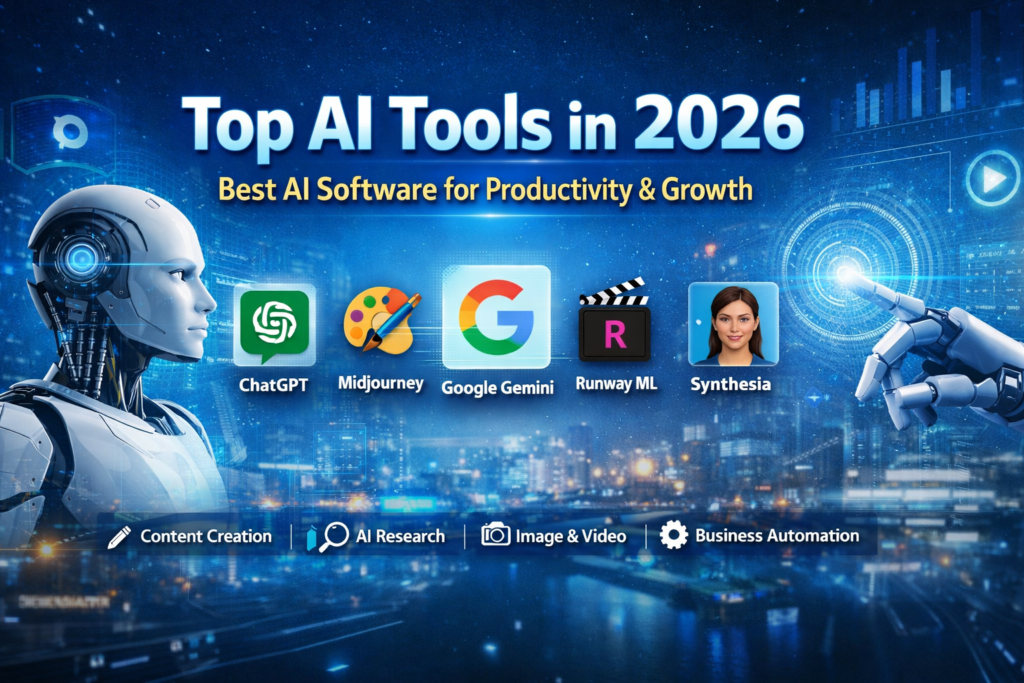
Top AI Tools in 2026: Best AI Software for Productivity & Growth

Top AI Tools in 2026: Best AI Software for Productivity and Growth TL;DR Introduction Artificial Intelligence is no longer the future; it’s the present. In 2026, AI tools have become smarter, faster, and more accessible than ever before. From content creation and coding to video production and business automation, AI tools are transforming how individuals and companies work. Over 70% of Indian startups are now integrating AI across their core business functions, demonstrating the rapid acceleration of AI adoption in India’s dynamic startup ecosystem. In this guide, Latest Techs News explores the top AI tools of 2026 that are dominating the tech world, helping users save time, boost productivity, and scale more efficiently. Why AI Tools Matter in 2026 In 2026, AI tools are no longer optional; they have become a core part of everyday work. From small startups to large enterprises, businesses are using AI to make smarter decisions, reduce manual effort, and move faster than ever. Marketers depend on AI for content creation and advertising, while developers use it to write, test, and debug code more efficiently. As technology continues to evolve, AI tools are helping professionals stay productive, competitive, and future-ready. Key Reasons AI Tools Are Essential in 2026 In short, using the right AI tools in 2026 is not just about convenience—it’s about staying relevant and ahead in a rapidly changing digital world. How We Selected the Top AI Tools To create this list of the best AI software in 2026, we carefully analyzed and compared today’s most popular AI tools. Our goal was to recommend tools that deliver real value, not just hype. Each tool was evaluated using practical, user-focused criteria to ensure accuracy and relevance. Our Selection Criteria This selection process ensures that every tool on our list meets high standards for quality, usability, and future readiness in 2026. Top AI Tools in 2026 1. ChatGPT – Best AI Tool for Writing & Conversations ChatGPT continues to dominate as one of the most powerful and versatile AI tools in 2026. With advanced natural language understanding, it helps users write high-quality content, brainstorm ideas, solve coding problems, and manage customer conversations efficiently. Best for: Pros: Highly versatile, beginner-friendlyCons: Advanced features may require a paid plan 2. Google Gemini – Best AI for Research & Data Analysis Google Gemini has emerged as a strong competitor in the AI space, especially for research-driven tasks. Its deep reasoning capabilities and seamless integration with Google’s ecosystem make it a reliable choice for professionals and enterprises. Best for: Pros: Accurate results, powerful reasoningCons: Limited availability in some regions 3. Midjourney – Best AI Image Generation Tool Midjourney remains a top choice for designers and creatives in 2026. It produces visually stunning, artistic images that are ideal for branding, marketing, and creative projects. Best for: Pros: Exceptional image qualityCons: Limited control over fine image details 4. Claude AI – Best AI for Long-Form Content Claude AI is known for generating safe, well-structured, and detailed long-form content. It is widely used by professionals and enterprises that require clarity, accuracy, and consistency. Best for: Pros: Context-aware and reliableCons: Less creative compared to some alternatives 5. Runway ML – Best AI Tool for Video Creation Runway ML has transformed video production with powerful AI-driven features such as background removal, motion tracking, and text-to-video generation. It’s a favorite among content creators and filmmakers. Best for: Pros: Advanced AI video toolsCons: Slight learning curve for beginners 6. Jasper AI – Best AI Tool for Marketing Content Jasper AI is built specifically for marketers who need fast, consistent, and SEO-friendly content. It helps create blogs, ad copies, emails, and landing pages while maintaining brand voice. Best for: Pros: Strong brand voice customizationCons: Premium pricing 7. Perplexity AI – Best AI for Real-Time Search Perplexity AI combines conversational AI with real-time search, delivering accurate answers backed by sources. It’s especially useful for research, journalism, and quick fact-checking. Best for: Pros: Real-time, source-based answersCons: Limited creative capabilities 8. Synthesia – Best AI Video Avatar Tool Synthesia enables users to create professional-quality videos using AI avatars—without cameras, studios, or actors. It’s widely used for training, demos, and educational content. Best for: Pros: Saves time and production costsCons: Limited avatar customization Read More: Top 10 Emerging Technologies in 2026 That Are Shaping the Future Category-Wise Best AI Tools in 2026 With so many AI tools available, choosing the right one depends on your specific needs. Below is a category-wise breakdown of the best AI tools in 2026, helping you quickly identify the most suitable option for your workflow. This category-based approach makes it easier to choose the right AI tool based on your goals, whether you’re a creator, marketer, developer, or business owner. Benefits of Using AI Tools Using AI tools in 2026 offers far more than just convenience. These tools help individuals and businesses work smarter, move faster, and stay competitive in an increasingly digital world. Key Benefits of AI Tools Overall, adopting the right AI tools in 2026 empowers users to achieve better results with less effort, making AI a key driver of long-term success. How to Choose the Right AI Tool Choosing the right AI tool is crucial for getting the best results from your investment. With so many options available, selecting a tool that aligns with your needs can greatly improve productivity and efficiency. Key Factors to Consider Choosing the right AI tool in 2026 can significantly impact your efficiency, quality of work, and overall results, making it an essential decision for long-term success. AI Trends Shaping Tools in 2026 Several key trends are shaping the future of AI tools in 2026. These advancements are making AI more powerful, flexible, and responsible across industries. Key AI Trends to Watch These trends ensure that AI tools will continue to evolve rapidly, offering smarter, more reliable, and more human-centric solutions in the years ahead. Conclusion: The rapid rise of AI tools in 2026 is transforming industries and redefining how work gets done. From content creation and software development

Scroll to Top